

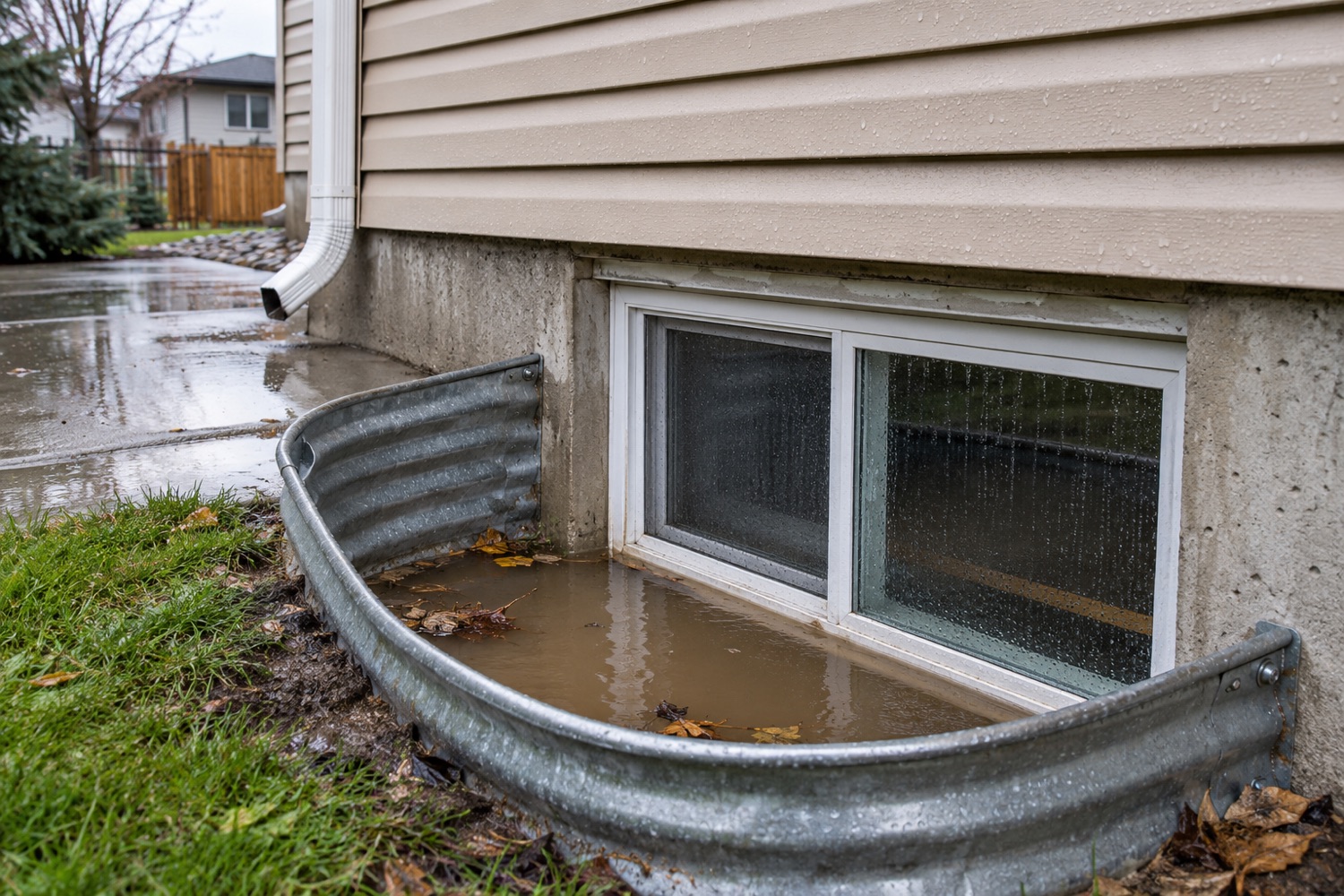
After a downpour, a basement window well can hold enough water to put the lower edge of the window under water. Inside, the first sign might be a damp carpet under the window, a streak of muddy water down the wall or a puddle that appears several feet from the glass. Outside, the well may already have drained by the time you walk around the house. That makes it easy to blame the window and miss the route the rain took to reach it.
There are two problems to solve after this kind of flood. The basement needs to be assessed for hidden moisture and contamination, and the exterior drainage needs to be checked before the next storm. Treating the wet room and the window well as one connected problem helps you decide which professional to call and what evidence to gather before the rain marks disappear.
How rain gets into a basement window well
A window well makes space for a basement window below the surrounding grade. During a storm, it can collect rain directly or receive runoff from a much larger area. Look at the surfaces leading up to it. A walk that slopes toward the house, a low point in a side yard or a downspout that empties beside the foundation can supply more water than the well can drain. When runoff is concentrated at one corner, other window wells on the same house may stay empty.
In some houses, the well has a drain. Leaves and silt can restrict the surface, and a buried connection can have problems farther down the line. A layer of clean-looking gravel says little about the condition of the drain below. If you cannot identify where the drain goes, have a drainage contractor assess it rather than pouring water into the well to see what happens. A test with a hose can send additional water into the basement or hide a problem that only appears during intense rain.
Sometimes the well itself is low relative to the yard. Runoff can simply flow over the rim when the soil beside it settles or a new patio changes the route. If the well has shifted away from the foundation, water may travel along that gap. Roof runoff can also overshoot or spill from a blocked eavestrough, landing beside the window even though the downspout outlet is much farther away.
Read the clues once the storm has passed
During rising water or a community flood, move to safety, follow official instructions and stay away from floodwater. Stay out of a flooded basement if electrical equipment, outlets or wiring may be affected. If it is safe to observe from outside after the storm, photograph the whole wall, the well, the nearest downspout and adjacent hard surfaces. A wider frame helps a contractor see how runoff could have reached the house.
Look for a band of stuck leaves or silt inside the well. That can give an idea of how high water rose even if none is left. A muddy line across the top of the well or a trail over the rim can suggest surface runoff. Note whether wet finishes appear below the window, beside it or at the floor and wall joint. Water marks are clues rather than proof of cause. More than one route, such as seepage at the footing and water over the sill, can produce damage in the same storm.
Write down when the water appeared relative to the rain. If the wall just below the window was wet during a brief downpour, tell the person inspecting it. If moisture showed up hours later after a long period of rain, share that detail as well. If it is safe to take indoor photos, include one from the doorway to show how far wet flooring extends. Avoid stepping into standing water, moving contaminated materials or taking the window apart to identify the leak.
What the basement needs after water gets in
Outdoor runoff can carry dirt and contaminants. Tell the restoration crew that the water passed through a well, a garden bed or another outdoor area. That detail helps them decide how to assess exposed finishes and contents. Use a safe route away from the affected room and keep children and pets clear while it is being evaluated. Follow any local instructions on when an affected area is safe to enter.
Ask the restoration team to check beyond the stain below the window. Water can reach the back of trim, wick into drywall and travel beneath floating flooring. A small puddle near the window can look similar to a much larger wet area concealed beneath carpet or laminate. The team may have to inspect behind finishes to identify what needs drying and what can be cleaned and kept. Provide photos and a timeline to your insurer and ask what it needs recorded before work changes the room.
When arranging basement flood restoration, describe the route the water seems to have followed. Say whether you saw the well overflow or noticed water indoors after the rain stopped. Give the dispatcher the rooms affected and any known hazards so the visit can be planned around the conditions on site. If you oversee several properties, confirm the address and the name of the person who can provide safe access.
Take on the exterior repairs in the right order
Start by finding out whether runoff is feeding the well. A contractor can check whether the yard or walkway drains toward the window and whether roof water is reaching that part of the house. Where hard landscaping or adjacent lots are involved, ask how a change would affect drainage along the property line and whether there are address-specific requirements.
Next, have the well and any drain inspected. Ask the contractor to identify the parts they can see, the presumed outlet and anything that remains unconfirmed. If the window or surrounding seal is damaged, have it evaluated too. New caulking at the window will have limited value if heavy rain can still submerge the sill. Conversely, a well that never ponds can still sit beside a window that leaks when water is driven against it. Photos from the storm help the contractor decide where to start.
A suitable cover can help keep leaves and some direct rain out of a well. Preserve any required emergency escape path. This matters if it serves a basement bedroom and someone may need to open the window and get outside quickly. Check window operation and ask a qualified installer about clearance and safe access before putting anything over the opening. A cover should form part of the drainage plan alongside grading and roof water management.
Plan access during winter and spring
A well that was clear in autumn can change over winter. Snow pushed off a driveway or shoveled off a path can end up beside the well, and thaw water can take a different route when parts of the yard are still frozen. After a thaw, look at where snow was stored and where the water actually flowed. If several people maintain the property, agree on where to pile snow so the same opening remains clear. This is especially helpful at a rental or a house with a seasonal shovelling service.
Prepare for the next storm after repairs
Before new carpet, insulation or trim goes in, ask for the drying results for the materials that will be covered. Keep an annotated photo of the original water marks and any exterior work that changed the runoff path. File it with the repair scope. If you sell the property, rent it out or change contractors, the photos will explain the issue more clearly than a note that says “window leak.”
After the next rain, inspect from outside when conditions are safe. Check for a new sediment line, signs that water has overtopped the well or unusual runoff near the downspout and walkway. Indoors, look for fresh marks around the sill and floor from a dry area. Record the location and time if something returns. Repeated water entry can be much easier to investigate when you can show whether it followed the same route as the first storm.
A flooded window well also makes a good prompt to look at other below-grade openings. One side of a house may have a newer walkway or higher planting bed while another still drains well. Check each location on its own, and add the ones that collect leaves to your normal yard maintenance. Catching a slow change in drainage is easier when you know how each well looks on an ordinary rainy day.
Easy steps to create a color palette
Lorem ipsum dolor sit amet, consectetur adipiscing elit lobortis arcu enim urna adipiscing praesent velit viverra sit semper lorem eu cursus vel hendrerit elementum morbi curabitur etiam nibh justo, lorem aliquet donec sed sit mi dignissim at ante massa mattis.
- Neque sodales ut etiam sit amet nisl purus non tellus orci ac auctor
- Adipiscing elit ut aliquam purus sit amet viverra suspendisse potent
- Mauris commodo quis imperdiet massa tincidunt nunc pulvinar
- Excepteur sint occaecat cupidatat non proident sunt in culpa qui officia
What is a color palette?
Vitae congue eu consequat ac felis placerat vestibulum lectus mauris ultrices cursus sit amet dictum sit amet justo donec enim diam porttitor lacus luctus accumsan tortor posuere praesent tristique magna sit amet purus gravida quis blandit turpis.

Don’t overspend on growth marketing without good retention rates
At risus viverra adipiscing at in tellus integer feugiat nisl pretium fusce id velit ut tortor sagittis orci a scelerisque purus semper eget at lectus urna duis convallis porta nibh venenatis cras sed felis eget neque laoreet suspendisse interdum consectetur libero id faucibus nisl donec pretium vulputate sapien nec sagittis aliquam nunc lobortis mattis aliquam faucibus purus in.
- Neque sodales ut etiam sit amet nisl purus non tellus orci ac auctor
- Adipiscing elit ut aliquam purus sit amet viverra suspendisse potenti
- Mauris commodo quis imperdiet massa tincidunt nunc pulvinar
- Adipiscing elit ut aliquam purus sit amet viverra suspendisse potenti
What’s the ideal customer retention rate?
Nisi quis eleifend quam adipiscing vitae aliquet bibendum enim facilisis gravida neque euismod in pellentesque massa placerat volutpat lacus laoreet non curabitur gravida odio aenean sed adipiscing diam donec adipiscing tristique risus amet est placerat in egestas erat.
“Lorem ipsum dolor sit amet consectetur adipiscing elit, sed do eiusmod tempor incididunt ut labore et dolore magna aliqua enim ad minim veniam.”
Next steps to increase your customer retention
Eget lorem dolor sed viverra ipsum nunc aliquet bibendum felis donec et odio pellentesque diam volutpat commodo sed egestas aliquam sem fringilla ut morbi tincidunt augue interdum velit euismod eu tincidunt tortor aliquam nulla facilisi aenean sed adipiscing diam donec adipiscing ut lectus arcu bibendum at varius vel pharetra nibh venenatis cras sed felis eget.